
Roof Moisture Inspections / Mapping
When water is able to get into the roofing system (i.e. flat roofing system), the water will change both the thermal conductivity (how fast heat passes through the roofing system) and the thermal capacitance (how much heat will be stored in the roofing system). The water damage to the roofing system is similar to the analogy of cancer; it is only going to get worst as time continues, and in colder climates where you have freezing temperatures the damage from water turning into ice and expanding will increase the rate of damage. The water damage in the roofing system will continue into the building structure, and the things inside of the building.
The cost of replacing an entire roofing system is very expensive, and many times the actual flaws that were the cause of the problem are not properly identified. Having a roof moisture survey can significantly reduce the cost of roof damage because the actual areas of damage can be identified and repaired without the need of replacing the entire roofing system in many cases.
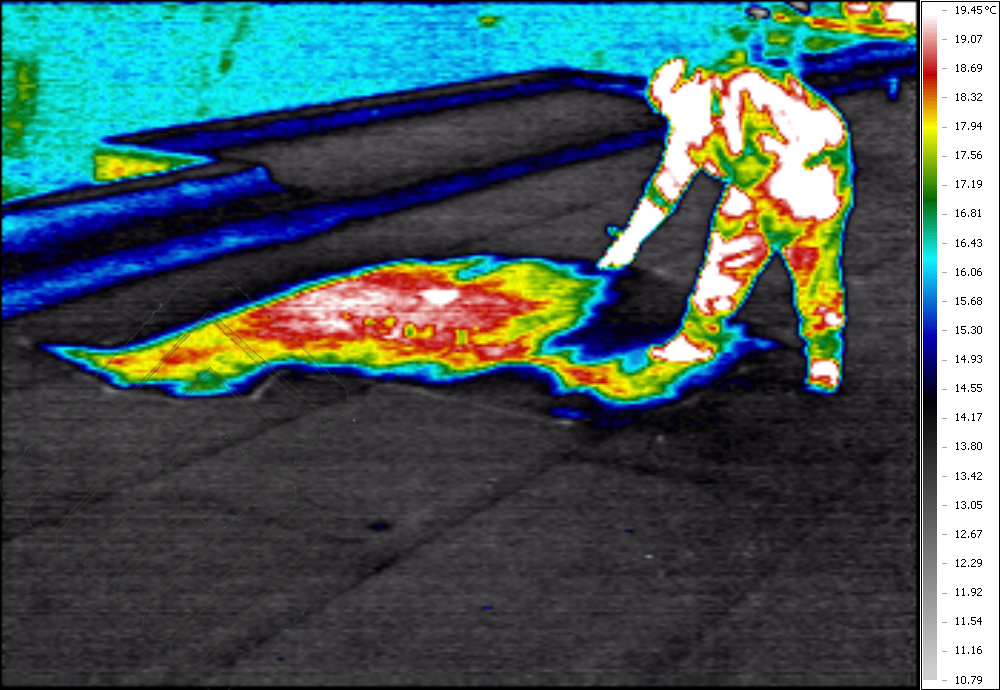
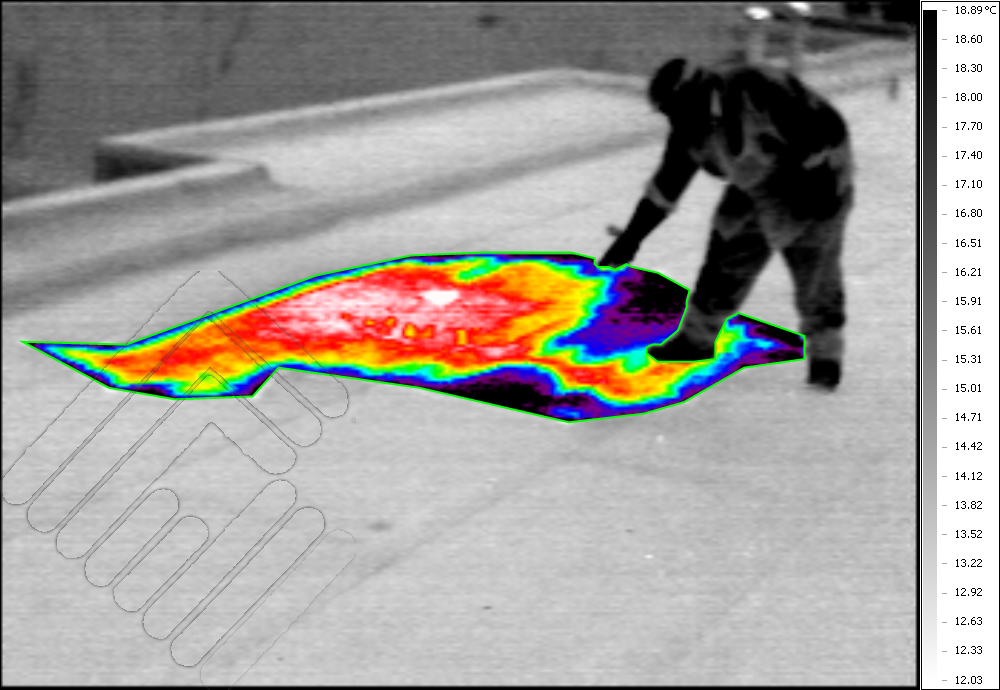
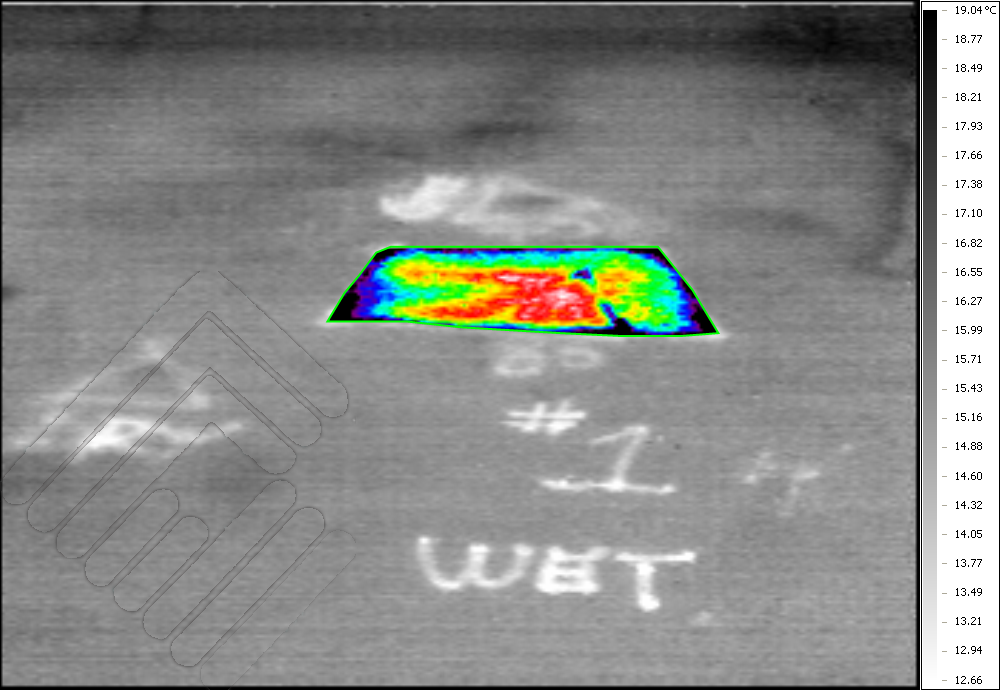
Infrared roof moisture inspections are based on the physics of the changes in the thermal capacitance of the roofing system between the areas that are dry verses wet. In the case of the wet areas of the roofing system, they will store heat from the day longer during the night as compared to the dry areas. This difference in the amount of heat that is stored in the roofing system is able to be viewed with an infrared camera approximately 1 hour after the sun has set. Area that are warmer are tested typically with core cuts and moisture probes to determine exactly how much water is in the roofing system ,at what level the water is moving through the system and how much damage there is. Typically capacitance moisture meters are used in addition to minimize the amount of destructive testing that is required to be able to define the extent of damage.
In some cases depending on the roofing system, the material will not allow for the moisture in the roofing system to present a good thermal image based on the water changing the thermal signature of the roof surface, so in this case capacitance moisture meters and core cuts / moisture probes are used. This work can be done during the day time, and is not necessary to have to do a capacitance inspection at night.
Both Infrared and capacitance moisture inspections are performed for just a few cents per square foot, depending on the size of your facility and your documentation requirements. Documentation can take many forms depending on your needs and budget.